
Client project · Industrial trading
A clearer presence.
A connected workspace.
A public business website and an internal trading application for Pharmet International.
- Project
- Website & business application
- Sector
- Industrial materials trading
- Relationship
- Client project
- Scope
- Design · Development · Product information
“Craft Meridian gave us a professional website and a private platform where our enquiries, suppliers and quotations finally live in one place. They understood how a trading business actually works.”
Two audiences, one business.
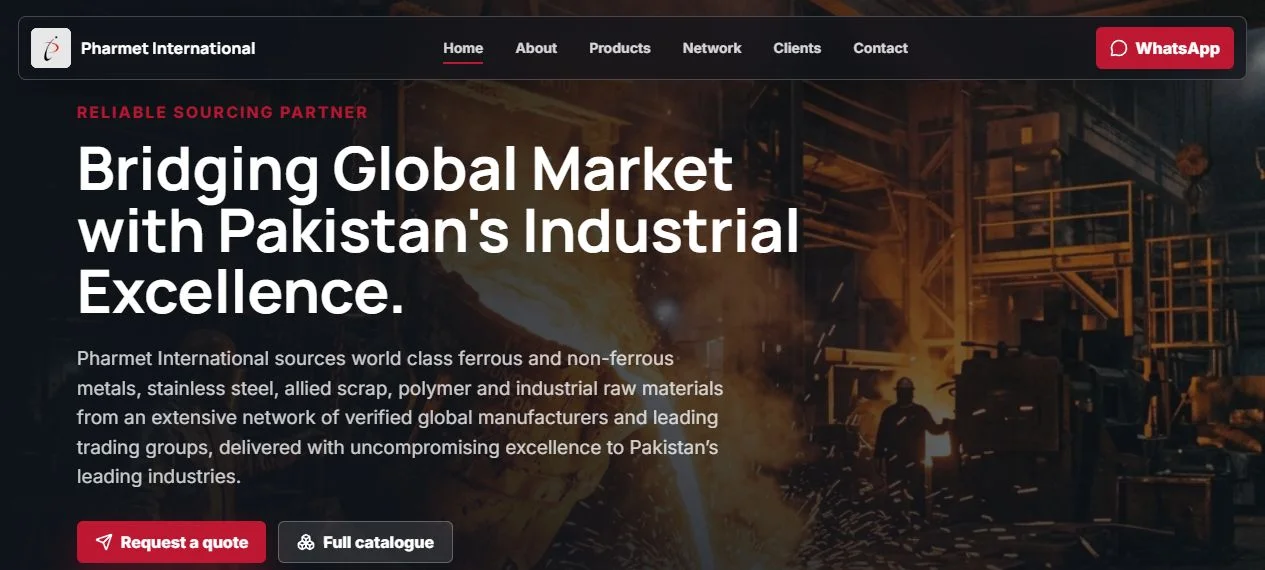
Pharmet International is a trading and indenting business working with industrial raw materials. Its public site needs to explain the company and product offering to prospective buyers. Its internal tools serve a different purpose: organising the records and relationships behind trading work.
The project covers the design and development of both experiences: a company website with product browsing and enquiry routes, and an internal application for trading information.
A route from understanding to enquiry.
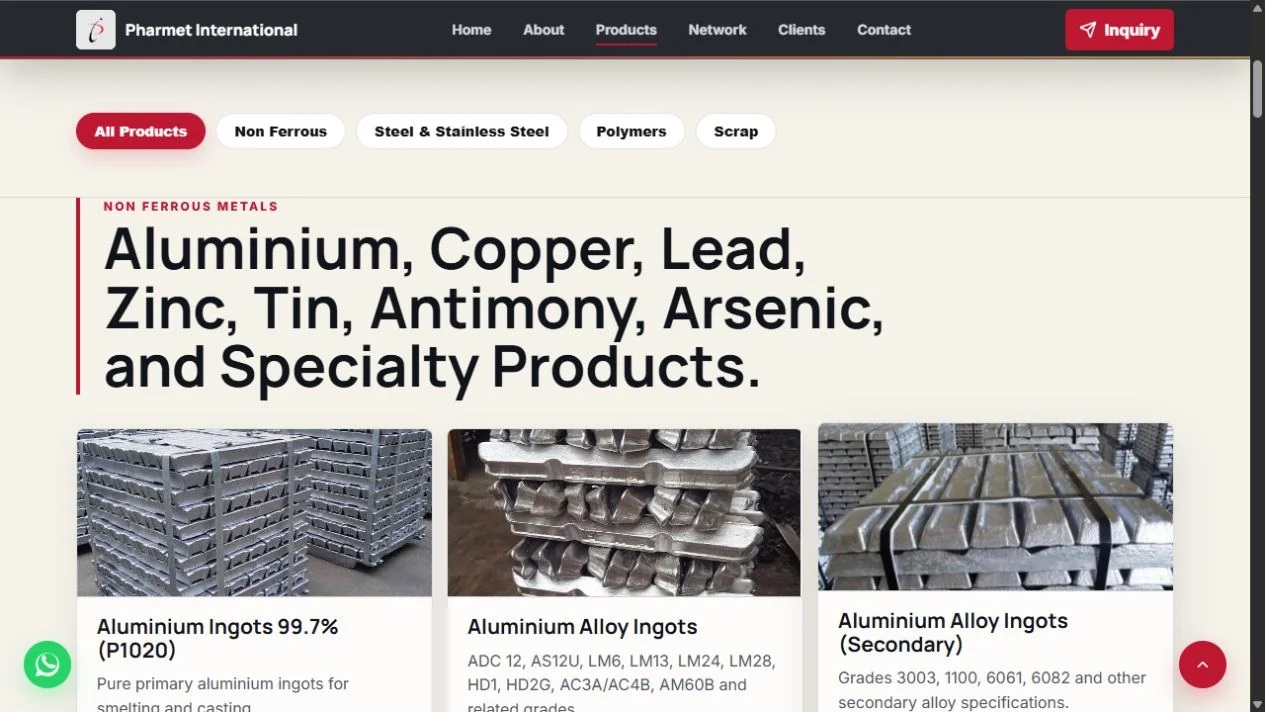
The public website introduces the sourcing business, presents its product categories and network, and gives visitors a direct route to ask about a requirement.
- A clear company introduction and prominent quotation and catalogue links.
- Product categories covering metals, steel, polymers, and scrap.
- Category controls and product cards with relevant material descriptions.
- Enquiry links near product information, supported by a dedicated contact page.
Organised around the enquiry.
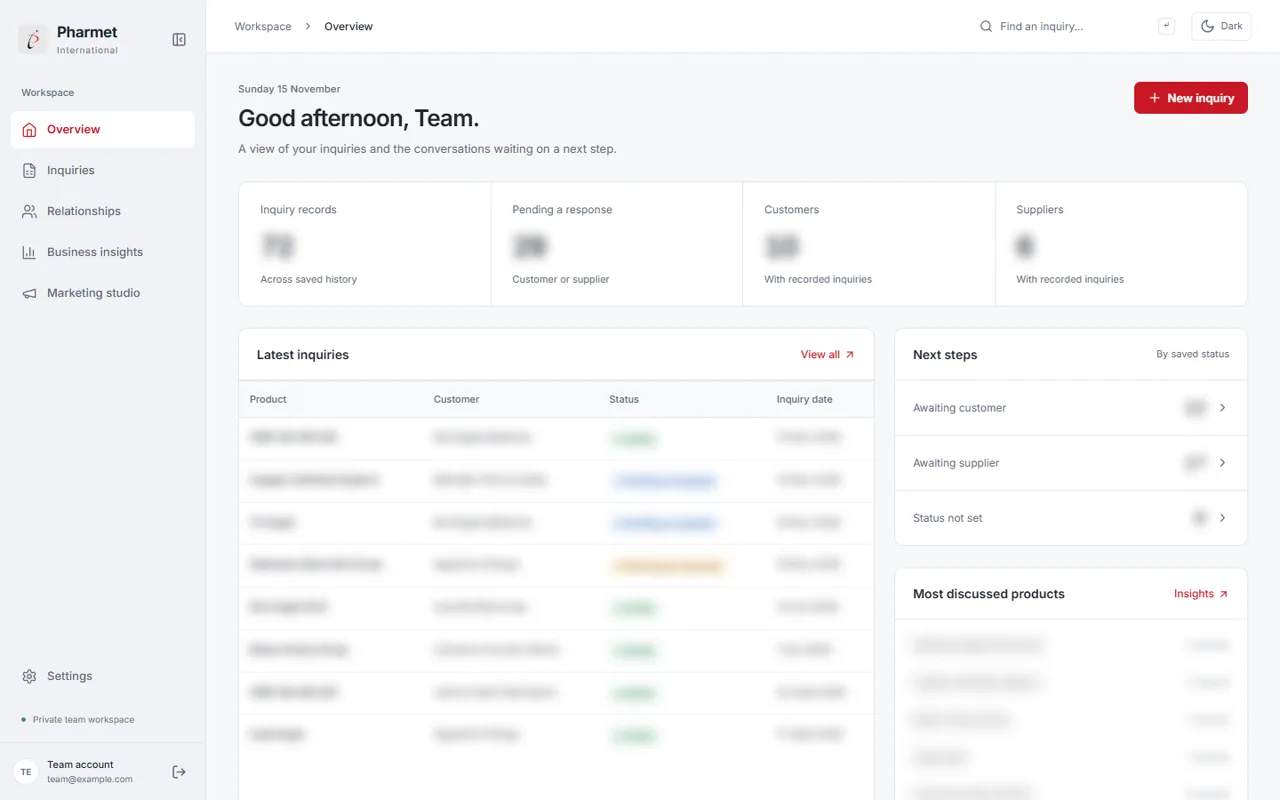
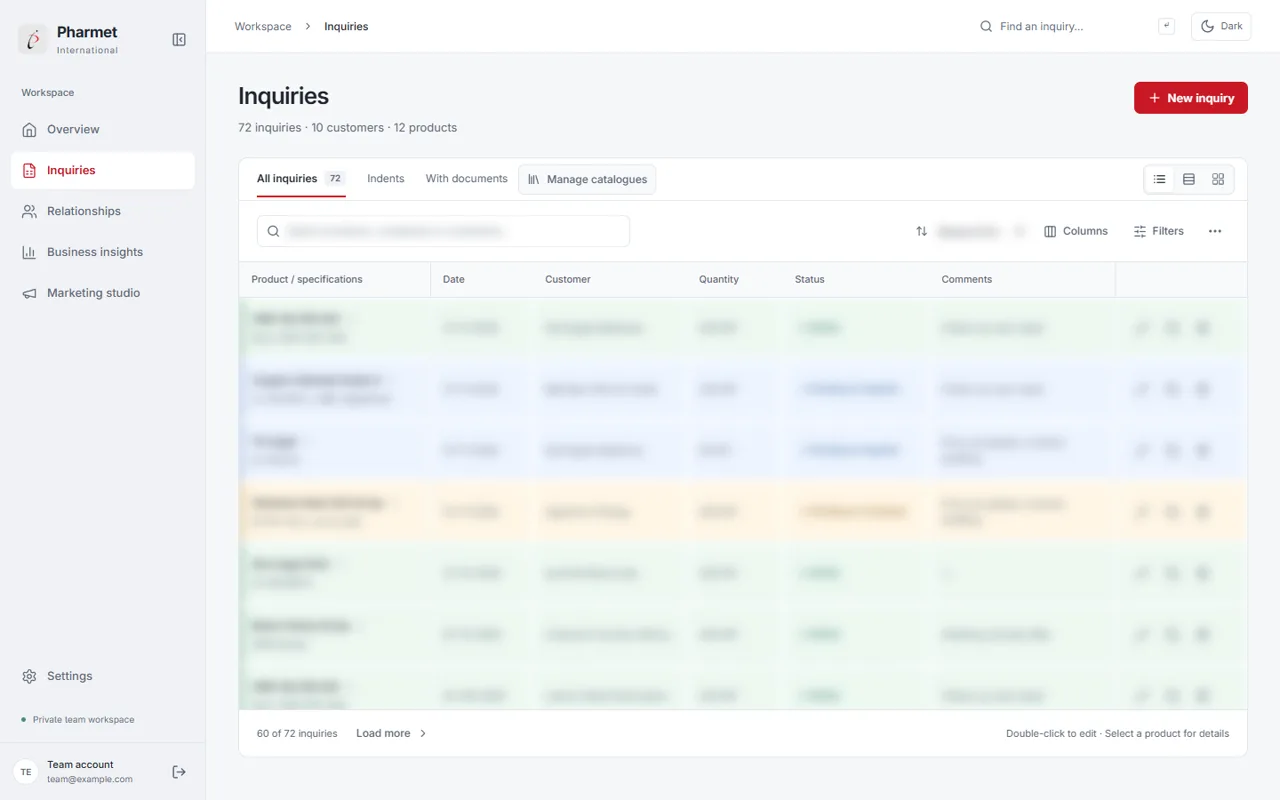
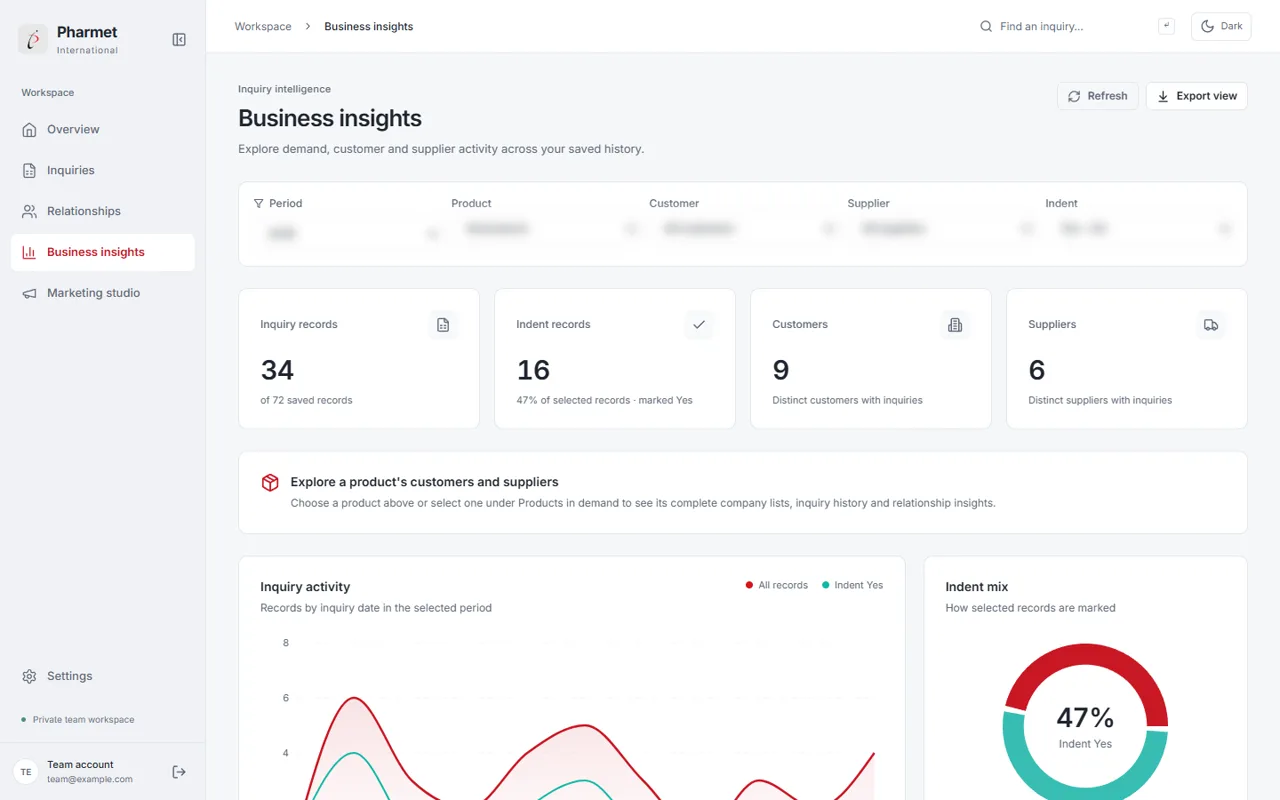
The internal application brings enquiry information together with customer, supplier, product, quotation, shipment, and document records. Search, filters, and list views support finding and reviewing information.
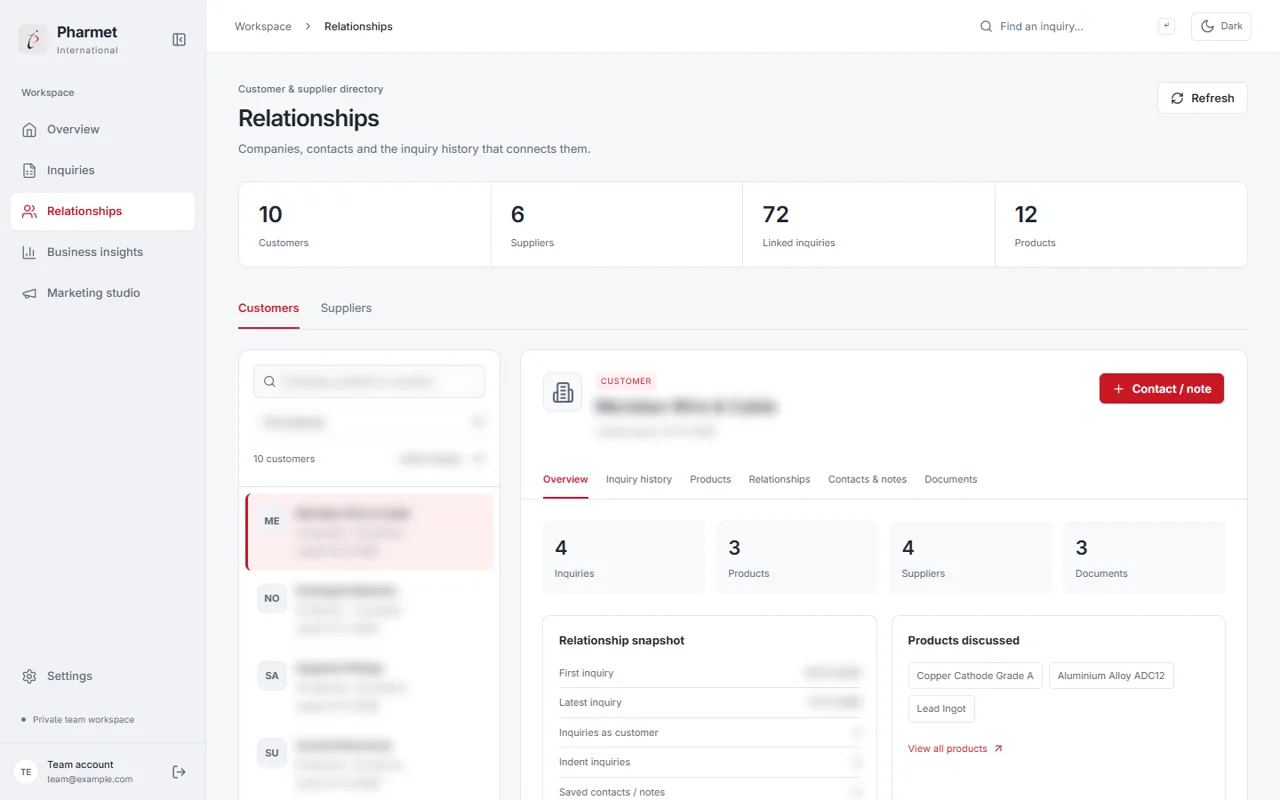
Customer and supplier views connect relationship records to their associated enquiries. This gives the interface a structure beyond a collection of disconnected lists: the enquiry can be understood alongside the people and information involved.
What the platform covers
- Customer and supplier information with related enquiry context.
- Enquiry and product records organised for browsing and review.
- Quotation, shipment, and supporting document information.
- A CRM for leads, with AI-drafted outreach that the team reviews before sending.
- An assistant that answers questions from Pharmet’s own product catalogue.
- Metal price tracking with short AI summaries of market movement.
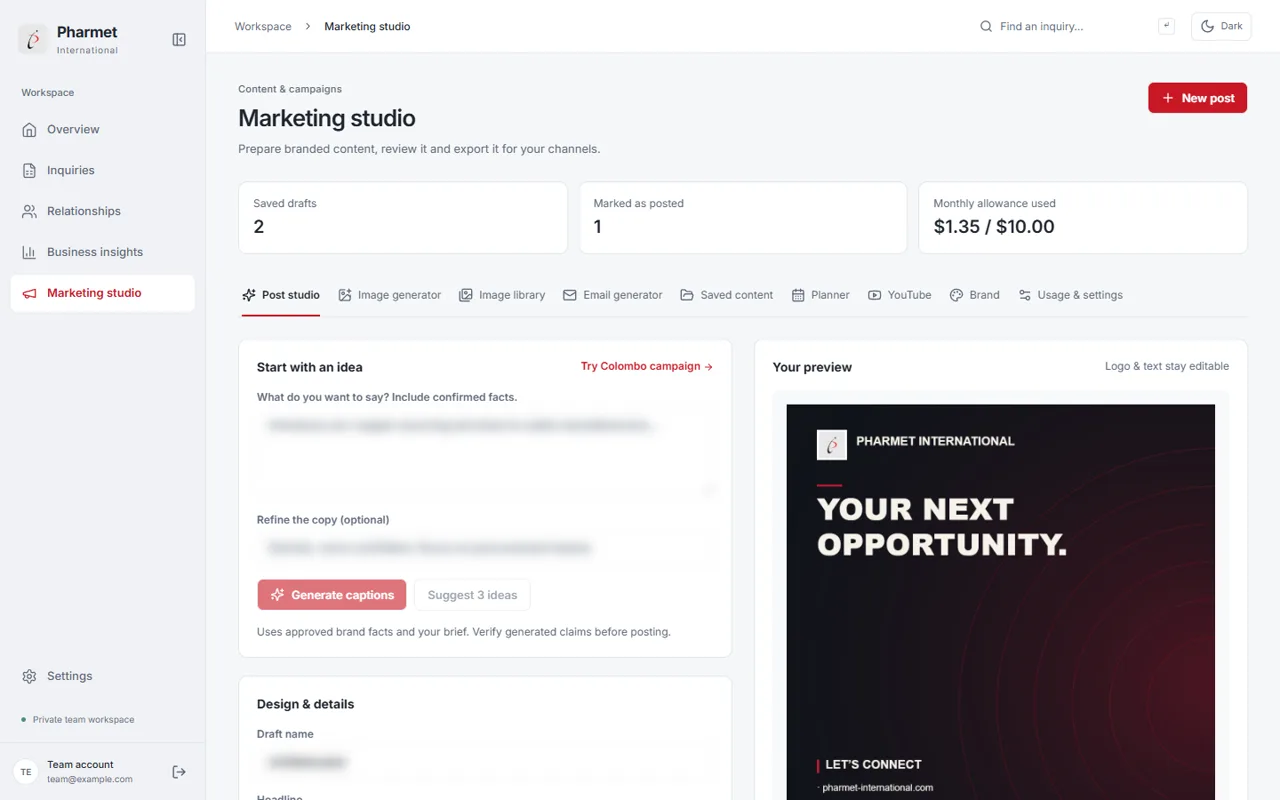
- A marketing studio for preparing branded content, organising drafts, and planning campaigns.
Built with React and Tailwind on the front end, a Python (FastAPI) service, a Postgres database on Supabase, and the OpenAI API, hosted on Netlify and Hugging Face.
Content prepared with generation tools is reviewed before publication. Private application records are not reproduced in this case study.
Product, quantity, and requirements.
One place to review the options.
Documents, context, and ownership.
A complete app, kept private.
The platform is a private workspace for the Pharmet team. Customer, supplier and pricing details are blurred in these screens.
Different jobs, clear purposes.
Begin with the relationships in the work — customer, requirement, supplier response, quotation, and document — then design the interface around that context.
The public website explains the company to customers. The internal workspace structures business information for operational use. Giving each experience a clear purpose keeps the marketing journey focused while allowing the application to reflect more detailed trading workflows.
The project demonstrates business website development, product information design, and an internal application covering connected trading records. The public website can be inspected directly using the link above. The team app is private, so its details are blurred above.
The case study describes delivered interfaces and functionality; measured reductions in admin time, increases in enquiries, and other business results have not been established.
Start with one process.
Make it easier.
Tell us how a request arrives, how supplier options are reviewed, and what happens next. We’ll define a practical first phase.